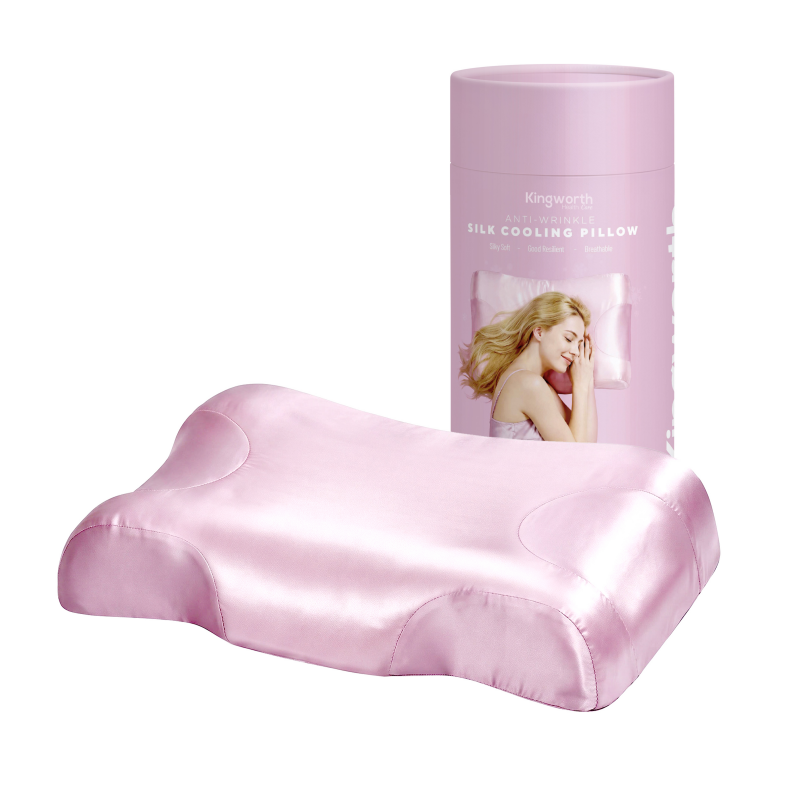
Choose the Cooling Design That Fits Your Collection
Cooling pillows can combine several features: a cool-touch cover, a gel component or a ventilated structure. Identify the features of each model before comparing samples, so your team knows what creates the surface feel and how the pillow is constructed.
These options serve different collection needs. A contoured model emphasizes a defined pillow profile; a shredded-foam design offers a filled construction; a body pillow extends the range into a different shape and use.
For a focused launch, choose models with clear differences in construction, feel or intended use, then build the packaging and product descriptions around those differences.
Cool Touch and Longer-Term Comfort Are Different Questions
A fabric can feel cool at first contact without establishing how the complete pillow will perform over several hours.
Qmax testing evaluates the initial warm or cool sensation when a material touches the skin. It provides useful information about contact cooling, rather than a measurement of an entire night’s sleep experience. NC State’s explanation of Qmax testing
For product development, separate three questions:
- Surface feel: How does the selected cover feel at initial contact?
- Pillow construction: How are the cover, liner, foam and any gel components arranged?
- Performance over time: What happens under the duration and conditions relevant to your intended claim?
We can work with your team to define the sample and testing requirements for the selected design. If your collection needs a measurable cooling statement, include the proposed claim in the brief so the evaluation can address it directly.
Build the Specification Around the Finished Pillow
A cooling-cover choice is only part of the specification. The pillow still needs the right dimensions, loft, feel and care requirements for your customer.
Cover Material and Surface
Discuss fabric composition, texture, color, weight and stretch. Confirm whether the cooling surface covers the whole pillow or one side, and identify how the liner and seams fit into the construction.
Use the actual fiber composition in your product specification. Collection names and descriptive terms should sit alongside clear material information.
Core, Filling and Loft
For a contoured memory foam pillow, specify overall dimensions and the height of each relevant section. For a shredded-foam pillow, define filling composition and weight, together with any intended adjustment feature.
Evaluate the sample with the final cover fitted. This gives your team a consistent reference for appearance, loft and feel.
Single-Side or Dual-Side Presentation
If a pillow has different surfaces on each side, explain the difference clearly on the product page and packaging. Confirm which side carries the cooling feature, how the cover should be fitted and whether the two sides have different care requirements.
For a dual-side collection, the sample review should include both surfaces.
Private Label Cooling Pillows, Developed for Your Channel
Kingworth supports existing-model adaptation and OEM/ODM development. Your project can cover the pillow, its textile components and its retail presentation.
| Development area |
Options to review |
| Shape and dimensions |
Existing contour, custom profile, overall size and loft |
| Core or filling |
Foam specification, filling composition and fill weight |
| Cover |
Material, texture, color, panel design and zipper position |
| Branding |
Woven labels, care labels, hangtags and inserts |
| Retail packaging |
Box or bag format, artwork, barcode placement and instructions |
| Export packing |
Unit pack, carton quantity, shipping marks and compression suitability |
For an online brand, include fulfillment dimensions and the unpacking experience in the brief. For store retail, consider how the packaging communicates the pillow’s shape, material and cooling feature.
If you sell in both the US and Europe, share the destination countries, size requirements and language versions early. This allows product specifications and packaging artwork to be developed together.
Discuss a custom cooling pillow project.
Compare Samples Under Consistent Conditions
A useful comparison starts with a clear question. You may be choosing between two fabrics, reviewing a gel design or checking whether a revised cover changes the finished pillow’s feel.
For a cooling-focused sample review, agree on:
- The sample identity: Model, cover material, core and construction.
- The comparison: Reference product or previous approved sample.
- The conditions: Temperature, humidity, conditioning and contact conditions relevant to the method.
- The measurement: Initial contact cooling or another defined performance question.
- The care stage: Before washing, after specified washing cycles, or both.
- The product configuration: Fabric alone, assembled pillow or pillow with the intended additional pillowcase.
Keep the report attached to the material or model tested. When a cover or construction changes, review whether the existing results still apply.
Available documentation can be reviewed during development, and additional testing can be discussed for your selected product and market.
Make Care Instructions Clear by Component
Buyers should be able to distinguish a washable cover from a washable pillow.
For each model, confirm the care instructions for the outer cover, inner liner and core or filling separately. A removable cover does not establish that the foam or gel component can be washed.
Before approving the label, review:
- Which components can be removed.
- Whether washing is permitted and by which method.
- Drying instructions.
- Any restrictions on heat, bleach or other treatments.
- How the cover fits after the agreed care procedure.
If wash durability is part of your cooling claim, include the specified care cycles in the performance evaluation.
Plan Your Seasonal Order from the Required Arrival Date
For a summer collection, provide the date the goods need to reach your warehouse or fulfillment center. Production scheduling should account for more than the final assembly stage.
Confirm the model assortment, quantities by color, material availability, sampling, testing, packaging artwork and transport plan before fixing the launch schedule.
For compression-packed products, also approve the packing method and unpacked condition. Review pillow recovery, cover appearance and any gel component after the packaging trial.
Kingworth can coordinate branded packaging, barcodes and export-carton details as part of the order. MOQ and timing are confirmed against the selected models and customization.
Develop Your Cooling Pillow Collection
Tell us which products you are considering and what matters most to your collection: surface feel, a defined contour, a filled construction or a distinctive branded presentation.
Share your target market, estimated quantities and required arrival date. We will review the product options, sample requirements and packaging details with your team.
Request a Cooling Pillow Quote & Sample