Compare Pregnancy Pillow Shapes Before Choosing a Model
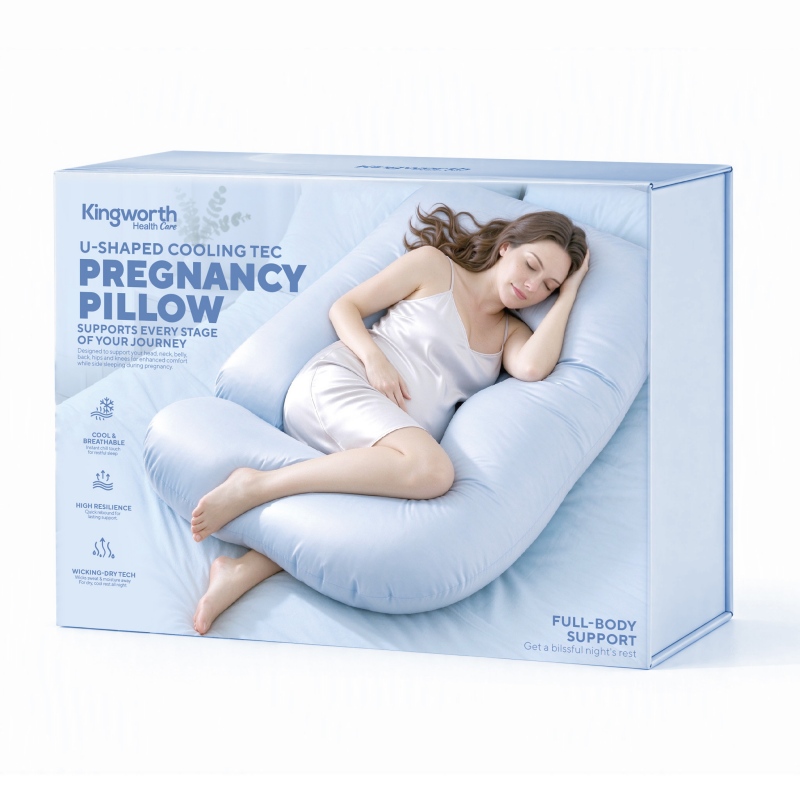
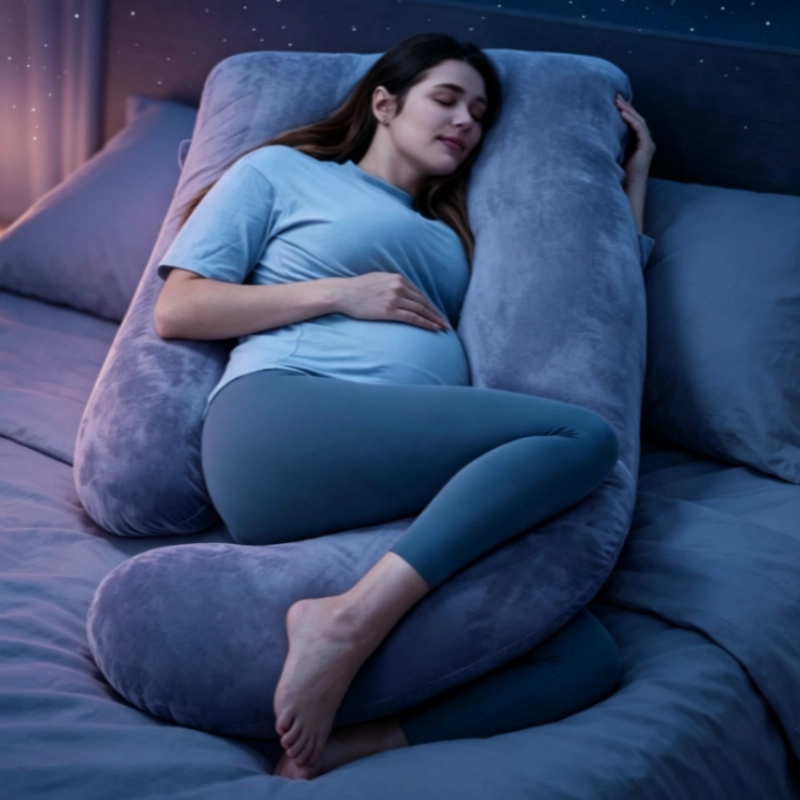
Pregnancy pillows are designed in different shapes to accommodate different sleeping preferences and body-support needs. Their overall length, curves, support areas and filling construction help distinguish one model from another.
For wholesale selection, compare the complete shape and intended use rather than choosing by appearance alone.
| Design |
Construction to review |
Details for your sample brief |
| U-shaped pregnancy pillow |
A full-length curved design with two side sections connected around the upper or lower end |
Overall length, width, inner opening, curve dimensions and support-section thickness |
| C-shaped pregnancy pillow |
A curved profile designed to wrap around part of the body |
Overall curve, opening direction, upper and lower support lengths and end shapes |
| J-shaped pregnancy pillow |
An elongated design with a curved or enlarged section at one end |
Total length, curved-end dimensions, support width and intended orientation |
| Full-length body pillow |
A long, relatively straight pillow intended to be positioned alongside the body |
Length, width, filling distribution, flexibility and finished profile |
| Custom pregnancy pillow |
A shape developed around your drawing, reference sample or product concept |
Measurement points, curve geometry, filling specification, cover pattern and intended use |
A U-shaped design offers a distinctive full-length profile, while a C-shaped model provides a more open curved form. A straight body pillow gives retailers a simpler shape to explain, with fewer curved sections to consider during cover development.
For a private label collection, first decide which shape is most suitable for your target customers and retail positioning. Then compare the dimensions, filling and cover construction of the selected models.
Make the Overall Dimensions Easy to Compare
A single length measurement does not describe the complete shape of a pregnancy pillow. Buyers also need to understand its width, thickness, curves and usable support areas.
For each selected model, establish a dimension drawing showing:
- Overall length and maximum width.
- Thickness at the main support sections.
- Inner opening dimensions for U-shaped or C-shaped designs.
- Dimensions and positions of curved sections.
- The shape and width of the upper and lower ends.
- Any removable sections or adjustable components.
Measure the finished pillow consistently and identify the measurement points on the specification sheet. For curved designs, use a drawing with clearly marked reference points rather than relying on a single overall dimension.
The filling can affect the finished dimensions and shape. A pillow with a flexible fiber filling may change its profile when repositioned, while other constructions may retain a more defined shape. Buyers should therefore evaluate the product in its normal use configuration as well as when it is laid flat for inspection.
For a collection with several shapes or sizes, explain the actual dimensional differences on the packaging and product pages. This gives customers more useful information than design names alone.
Develop the Filling and Feel Alongside the Shape
A distinctive pregnancy pillow shape still needs a suitable finished feel. During sampling, review the filling, inner construction and outer cover as one assembled product.
Your brief can address three separate decisions:
Shape and support areas
Which sections should be longer, wider, softer or more structured? Mark the requested changes on a drawing or reference sample. For curved designs, also identify how the pillow should sit around the body.
Filling and feel
What type of filling do you want to use, and how should the finished pillow feel when compressed and repositioned? Record the agreed filling specification and sample feedback instead of relying only on descriptions such as soft, firm or supportive.
Filling distribution
How should the filling be distributed across the full length of the pillow? Check whether the curved sections and end areas remain sufficiently filled, and whether the filling shifts noticeably during handling.
For comfort evaluation, record the intended use and the conditions under which samples are compared. Gather feedback on the complete pillow before choosing the final version for your range.
Select a Cover That Works with the Full-Length Design
The cover should follow the pillow’s shape, remain practical to remove and refit, and support the care requirements of the target market.
Kingworth supports cover development across fabric composition, texture, color, panel construction and branding. Depending on the selected design, buyers can review different textile options and cover details as part of the OEM/ODM development process.
For pregnancy pillows, pay particular attention to:
- Panel layout: How the fabric follows long curves, rounded ends and connecting sections.
- Seam position: Whether seams remain properly aligned around curved areas and high-stress sections.
- Zipper access: Whether the filling can be inserted, removed or adjusted without excessive effort.
- Cover fit: Whether the cover follows the full-length profile without excessive gathering or tightness.
- Post-wash dimensions: Whether the cover retains its agreed dimensions after the specified care procedure.
- Replacement cover compatibility: Whether separately supplied covers can be matched to the correct model and size.
Confirm care instructions separately for the outer cover, inner liner and filling. A removable or washable cover does not establish that the complete pillow can be machine washed.
If replacement covers are part of your collection, specify their model compatibility, dimensions and labeling at the same time as the original product.
Adapt an Existing Design or Develop Your Own Pregnancy Pillow
Existing-Model Private Label
Choose an existing pregnancy pillow shape and focus development on the filling specification, cover fabric, color, labels and packaging.
This provides a clear starting point for sample comparison. Your team can review the existing dimensions and construction before deciding which modifications are needed for the target market.
Kingworth can review the selected product requirements and discuss which changes are compatible with the existing design. Any requested changes to the shape, filling or cover should be confirmed during sample development.
Custom Pregnancy Pillow Development
For a new profile, submit a drawing, physical sample or annotated product concept. Include the required dimensions and explain which sections you want to change.
Our OEM/ODM service supports product customization and sample development discussions. The filling construction and fitted cover should be reviewed together so that changes to the pillow shape are reflected in the cover pattern.
Before development begins, agree on the prototype stages, tooling requirements where applicable, development costs, mold ownership if tooling is involved, usage terms and expected quantities. Any exclusivity requirements should also be included in the project agreement.
Turn Sample Approval into a Repeatable Specification
An approved sample should be supported by a clear record of what your team accepted.
For pregnancy pillows, the approval record should cover:
| Checkpoint |
What to record |
| Overall geometry |
Length, width, thickness, curves and dimensions at defined points |
| Filling specification |
Agreed filling material, quantity or construction requirements, and reference feel |
| Filling distribution |
Filling consistency across the main body, curved areas and ends |
| Finished cover |
Fabric composition, color, seams, closure and fit |
| Workmanship |
Seam condition, zipper operation, surface finish and visible defects |
| Packing |
Unit pack, carton specification and unpacking instructions |
| Product information |
Model name, dimensions, care instructions and label artwork |
Keep subjective comfort feedback separate from measurable inspection requirements. Both are useful, but a production inspector needs defined criteria for accepting a batch.
If compression packing is selected, include a packaging trial. Review the recovered shape, dimensions, filling distribution and cover appearance after the agreed unpacking period.
For repeat orders, use the retained sample and specification as the reference. Proposed material or construction changes should be reviewed before production.
Prepare the Packaging and Product Information
Pregnancy pillows are often larger and more complex in shape than standard bed pillows. Their packaging should therefore be considered during product development rather than after the sample has been finalized.
Review the following points:
- Product presentation: Whether the selected pillow shape is shown clearly on the retail packaging.
- Dimension information: Whether overall dimensions and relevant shape details are easy to understand.
- Unpacking instructions: Whether customers need to allow time for the pillow to recover after compression packing.
- Care information: Whether the instructions distinguish between the outer cover, inner liner and filling.
- Branding: Whether labels, inserts, barcodes and retail packaging match the private label requirements.
For online listings, use top-view and side-view product images to communicate the overall shape. A simple dimension diagram can help customers compare U-shaped, C-shaped and full-length designs before purchasing.
If a product is compression-packed, verify the packaging method with the selected filling and cover construction. Do not assume that every material or shape is suitable for the same compression process.
Keep Product Claims Clear and Evidence-Based
Pregnancy pillows are comfort products, and their descriptions should focus on the actual design, materials, dimensions and intended use.
For wholesale and private label development, buyers should distinguish between describing a product’s shape and making claims about health outcomes. Avoid presenting a particular pillow design as a treatment for pregnancy-related pain or as a guarantee of improved sleep unless the relevant claims are properly substantiated and reviewed for the intended market.
Your product information can explain:
- The selected shape and overall dimensions.
- The filling and cover materials.
- The intended positioning and product configuration.
- Whether the cover is removable and its care instructions.
- Available size or color options.
- Any tested product features supported by suitable evidence.
Clear descriptions help customers understand what they are buying and give retailers more consistent information across product pages, packaging and sales materials.
Build Your Pregnancy Pillow Collection
Send us the models you want to compare or the shape you want to develop. Include your preferred dimensions, filling materials, cover requirements, target market and estimated quantity per design.
Our team can review the shape, filling, cover and packaging requirements, then discuss the sample and quotation steps for your project.
Kingworth supports private label and wholesale development for comfort products, with customization discussions covering product construction, textile selection, branding and packaging.
Contact our team at info@king-worth.com or +86 133 3687 4040 to discuss your Pregnancy Pillow collection.